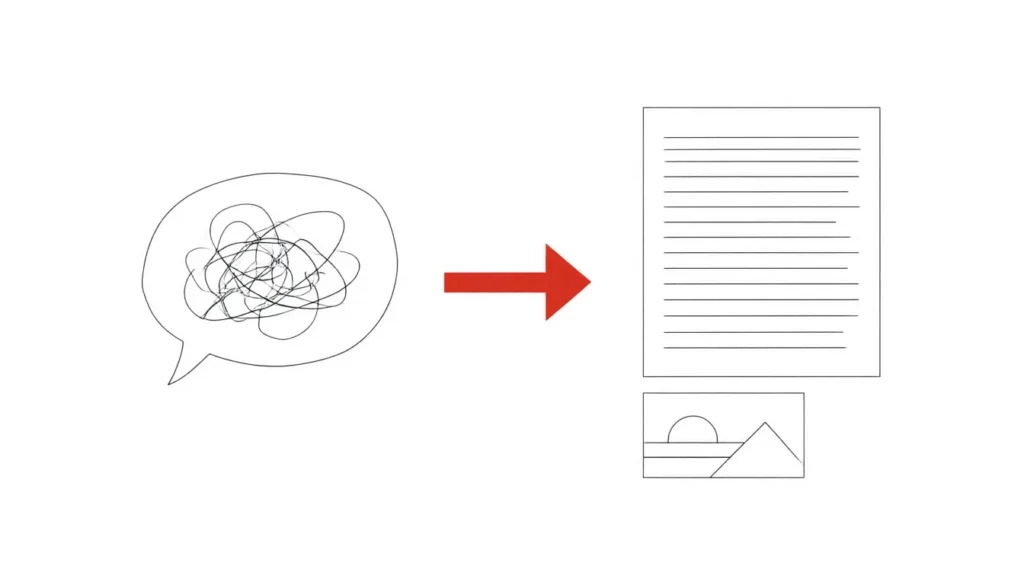
Image models reward precise prompts, and most people don’t write them. PromptEnhancer is Tencent Hunyuan’s answer: a dedicated model that rewrites a rough prompt into a clearer, structured one while keeping the subject, action, style and layout you asked for. It works for text-to-image prompts and for image-editing instructions.
| Repository | Hunyuan-PromptEnhancer/PromptEnhancer |
| Maintainer | Tencent Hunyuan |
| Primary language | Python |
| GitHub stars | 3,770 (as of 15 September 2026) |
| Last push | 18 August 2026 |
| License status | Unverified — see below |
What it does
The README describes a prompt-rewriting utility with chain-of-thought rewriting at its core (the method is detailed in the technical report). Its listed features:
- Two modes: text-to-image prompt enhancement, and image-to-image editing instructions refined with the source image as visual context.
- Intent preservation across rewriting: subject, action, style, layout and attributes.
- Several model options: a 7B model, a 32B model, an Img2Img editing model and quantized GGUF versions.
The team has also released a T2I-Keypoints-Eval dataset and evaluation script for measuring how well generated images follow the key points of a prompt.
Who it’s for
- Builders of image-generation apps who want a prompt pre-processing step in front of their model.
- Researchers evaluating prompt following in text-to-image systems.
Getting started
Install with pip install -r requirements.txt, or use the provided GGUF install script for quantized models with CUDA. The README recommends starting with PromptEnhancer-7B, downloaded from Hugging Face with huggingface-cli download. Its own sizing table:
| Model | Download size | Memory (per README) |
|---|---|---|
| PromptEnhancer-7B | 13GB | 8GB+ |
| PromptEnhancer-32B | 64GB | 32GB+ |
| 32B-Q8_0 (GGUF) | 35GB | 35GB+ |
| 32B-Q6_K (GGUF) | 27GB | 27GB+ |
| 32B-Q4_K_M (GGUF) | 20GB | 20GB+ |
A hosted Gradio demo of the 32B model is linked from the README if you want to try it before downloading anything.
License status
Unverified. GitHub could not match this project’s license file to a standard open-source license (it reports NOASSERTION). The Signal has not reviewed the terms. Read the license file, and the terms on each model’s Hugging Face page (the 7B model is distributed inside the HunyuanImage-2.1 repository), before any commercial use or redistribution.
Limitations and open questions
- Adding a 7B–32B language model in front of your image model means extra latency and memory per generation.
- The README’s memory figures are guidance, not tested minimums across hardware.
- We have not measured whether rewritten prompts improve results with image models other than Hunyuan’s.
Sources
Related: HunyuanVideo-1.5, Tencent Hunyuan’s open video model · more repo profiles.
This profile was drafted with AI assistance from the project’s public repository and reviewed by The Signal’s editors before publication. See our AI Disclosure.